Battery backup
Storage sized for real outage behaviour in the Philippines: brownouts during storms, plus evening use after the sun goes down. LiFePO4 only — no lead-acid banks.
On-site scope of work
Backup load list
Our engineer lists exactly what should stay alive: lights, refrigerator, routers, fans, one or two inverter aircon units. That list sets both battery kWh and the continuous and surge kW the inverter has to hold.
Battery sizing
Capacity is computed from backup hours multiplied by the backed-up load, with usable depth-of-discharge and round-trip losses accounted for — not the nameplate figure. Stacks are matched in model and state of charge so the BMS balances properly.
Changeover and wiring
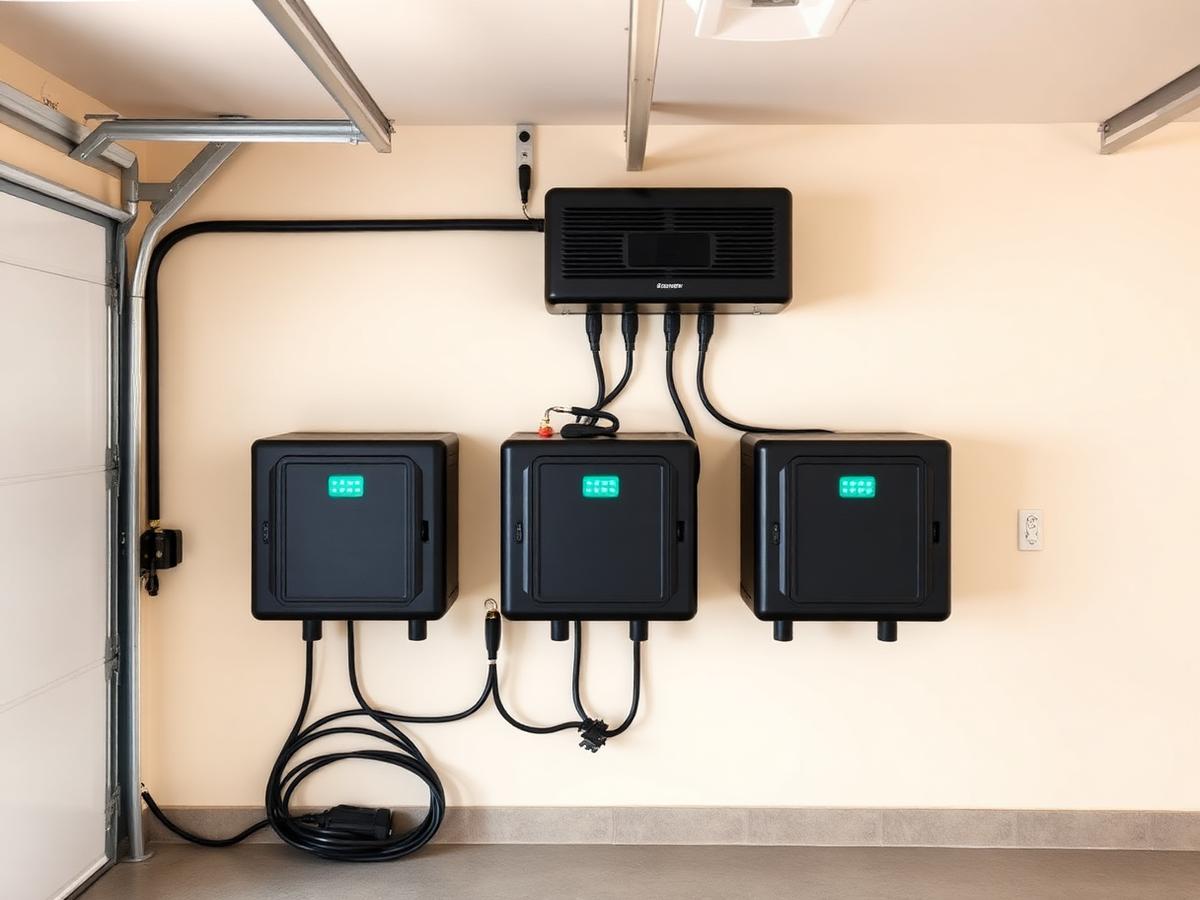
A separate essential-loads panel is built so only the backed-up circuits transfer. Battery-to-inverter cables are sized for the full charge and discharge current with short, equal-length runs, torqued terminals and correctly rated DC fusing and isolators.
Installation environment
Wall-mounted units are installed indoors or in a shaded, ventilated, flood-safe area — above known flood levels and away from direct sun, which matters for cycle life in PH heat and humidity.
Charge and discharge strategy
Time-of-use and reserve settings are programmed so the battery keeps a storm reserve during the rainy season while still cycling for evening use. Generator or grid-charge behaviour is set explicitly, not left at factory default.
Blackout testing
Before turnover we cut the grid supply and confirm transfer time, that the essential panel holds the listed load, and that the system re-synchronises cleanly when grid returns. Results are recorded in the commissioning sheet.
Codes and practice we work to
- LiFePO4 chemistry with integrated BMS and communication to the hybrid inverter
- DC protection, isolation and cable sizing per Philippine Electrical Code
- Manufacturer clearance, ventilation and mounting requirements observed
- Documented blackout transfer test at commissioning